
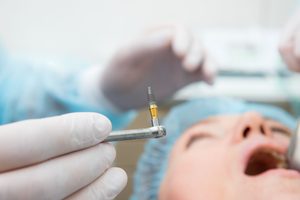
Tooth loss can significantly detract from your daily quality of life as once-basic tasks, such as eating, speaking, and smiling confidently, suddenly become much harder. If you’re seeking a lifelike way to close the spaces and rebuild your smile, you might be a good candidate for dental implants.
These are the only replacement teeth surgically embedded in the jaw, and it’s only natural to have questions about the procedure and recovery. For example, many patients wonder how long they need to take off work to heal after their new teeth are placed. Continue reading to learn more about it!
How Do Dental Implants Work?
Dental implants involve placing one or more biocompatible support posts, usually made from titanium or resilient ceramic, directly into the jaw. A single rod can anchor a dental crown to fill a gap in your grin, or two or more can hold a specially crafted set of dentures or a dental bridge to replace multiple teeth or restore your entire arch.
Once you’ve recovered sufficiently after the procedure, your dentist will contact you to schedule another appointment to make impressions. Then, depending on their technology, they either use software to carve your prosthetic(s) with an onsite milling machine, or send the information to a dental laboratory for creation.
How Long Does Dental Implant Recovery Take?
Getting dental implants typically involves multiple visits over several months because recovery takes time. This is because the mouth needs 3 to 6+ months to generate enough bone material to fully envelop and fuse with the post, though the exact timeframe can depend on your unique circumstances.
Completing this healing stage successfully is essential because it gives your new teeth strength and resilience. But that doesn’t necessarily mean patients can’t function or engage in normal activities, like clocking in at work, for months at a time.
When Can I Return to Work After Dental Implant Placement?
You’re not alone if you’re wondering when you can get back to work after your implant procedure so you can plan and budget accordingly. But the answer can vary based on your individual needs.
For example, some patients are able to return to work the day after their appointment, while others take a few days off before getting back to their normal schedule. You might need some extra rest and recuperation if you’ve had multiple implants placed or if your job involves physical exertion that elevates your heart rate or blood pressure, which can interfere with healing and contribute to implant failure.
Your dentist can provide an estimated recovery timeline based on your circumstances and will let you know whether you should plan on taking some extra time off work to heal after your procedure.
Meet the Author
Dr. Stephen Tomaszewski, or “Dr. Steve”, is passionate about providing the same top-quality dental care patients have come to expect from the practice as established by his father before him. He earned his Doctor of Dental Surgery from the Louisiana State University School of Dentistry then completed an Advanced Education in General Dentistry residency in Okinawa, Japan, after joining the U.S. Navy Dental Corps. Today, he works with local specialists for accurate implant placement, then provides beautiful, lifelike replacement teeth to improve your smile’s function and appearance. You can request an appointment on the website or call (985) 641-4444.